
The Frame on the Thames
Heart of DarknessThis flow follows the Thames framing narrative as Marlow’s recollection alters the listeners’ view of imperial history and their own world.
increasing Bearing strength in each event
 decreasing
Bearing strength in each eventdecreasingThe Settled Yacht
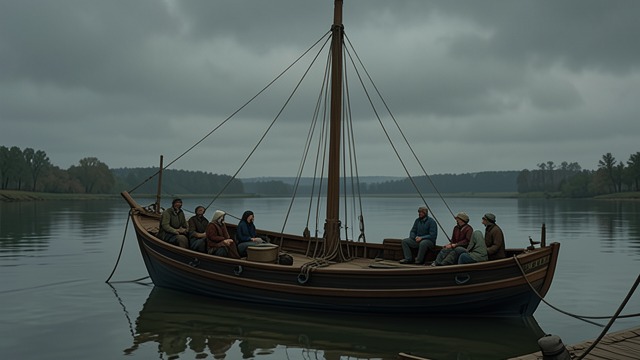
Waiting on the Thames
A Quiet Gathering
The frame narrator describes the Nellie resting at anchor on the Thames. Its passengers share a maritime bond and sit in silence as the day fades.
The River’s Memory
The Thames appears to hold the history of ships, explorers, and imperial ventures. The group first sees its waters through the familiar language of national achievement.
A Sudden Reversal
Marlow interrupts that confidence by calling the Thames one of the dark places of the earth. His remark turns the river’s history into a question about conquest and memory.
Marlow’s Roman Digression

Darkness Before Empire
An Older Invasion
Marlow imagines Roman soldiers entering Britain as outsiders confronting an unfamiliar landscape. Their experience gives the modern audience a reversed view of imperial expansion.
Conquest Examined
He calls conquest robbery when it serves only appetite and force. An idea may redeem it, he argues, but only if the idea is genuine and unselfish.
A Warning in History
The Roman comparison prevents the audience from treating British power as timeless or innocent. The conqueror’s self-image changes when viewed from the position of the conquered.
The Tale Takes Shape

A Story with Uncertain Edges
The Point of Departure
Marlow says that his journey upriver threw light on his experience and thoughts. Yet he insists that its meaning was sombre and difficult to make clear.
A Dreamlike Account
He warns that a narrated memory cannot fully reproduce the sensation of living through it. His listeners receive an account whose silences and uncertainty are part of its meaning.
The Framing Voice
The frame narrator hears Marlow in darkness, sometimes more as a voice than a visible figure. The setting makes the story’s questions about darkness present in the act of telling.
The Listeners’ Silence
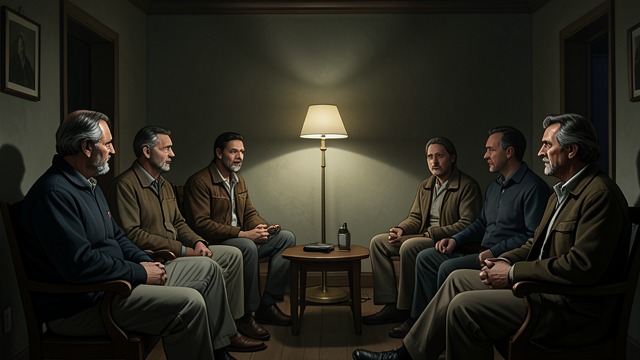
Hearing the Journey
Uneasy Attention
Marlow’s listeners rarely interrupt him, though one protests when he compares their work to a balancing trick. Their reactions show that the tale presses beyond entertaining adventure.
Familiar Life Reconsidered
Marlow challenges the listeners’ confidence in ordinary safety and respectable routine. His distant experiences make their settled world seem less morally secure than it first appeared.
Silence as Response
The listeners do not arrive at a clear verdict. Their quiet leaves Marlow’s account suspended between personal memory and an unsettling judgment on the world outside the river.
The Darkened Estuary
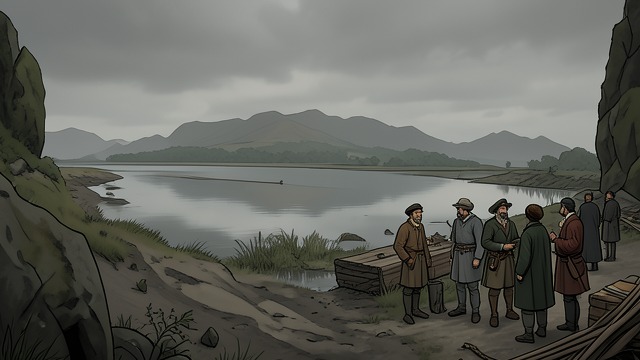
The River at the End
Return to the Thames
Marlow finishes his story without resolving its moral uncertainties. The group’s attention returns to the Thames and the approaching change of tide.
A Changed Landscape
The river that opened as a symbol of national history now lies under an overcast sky. The familiar waterway seems to lead toward darkness rather than uncomplicated imperial glory.
An Unclosed Meaning
The frame narrator’s final image carries the Congo journey back to London. Marlow’s story has made the listeners’ own river part of the same troubling history.
At dusk before Marlow begins his tale
At the opening of Marlow’s tale
After Marlow introduces his African voyage
During Marlow’s long narration aboard the Nellie
At the close of Marlow’s tale
